
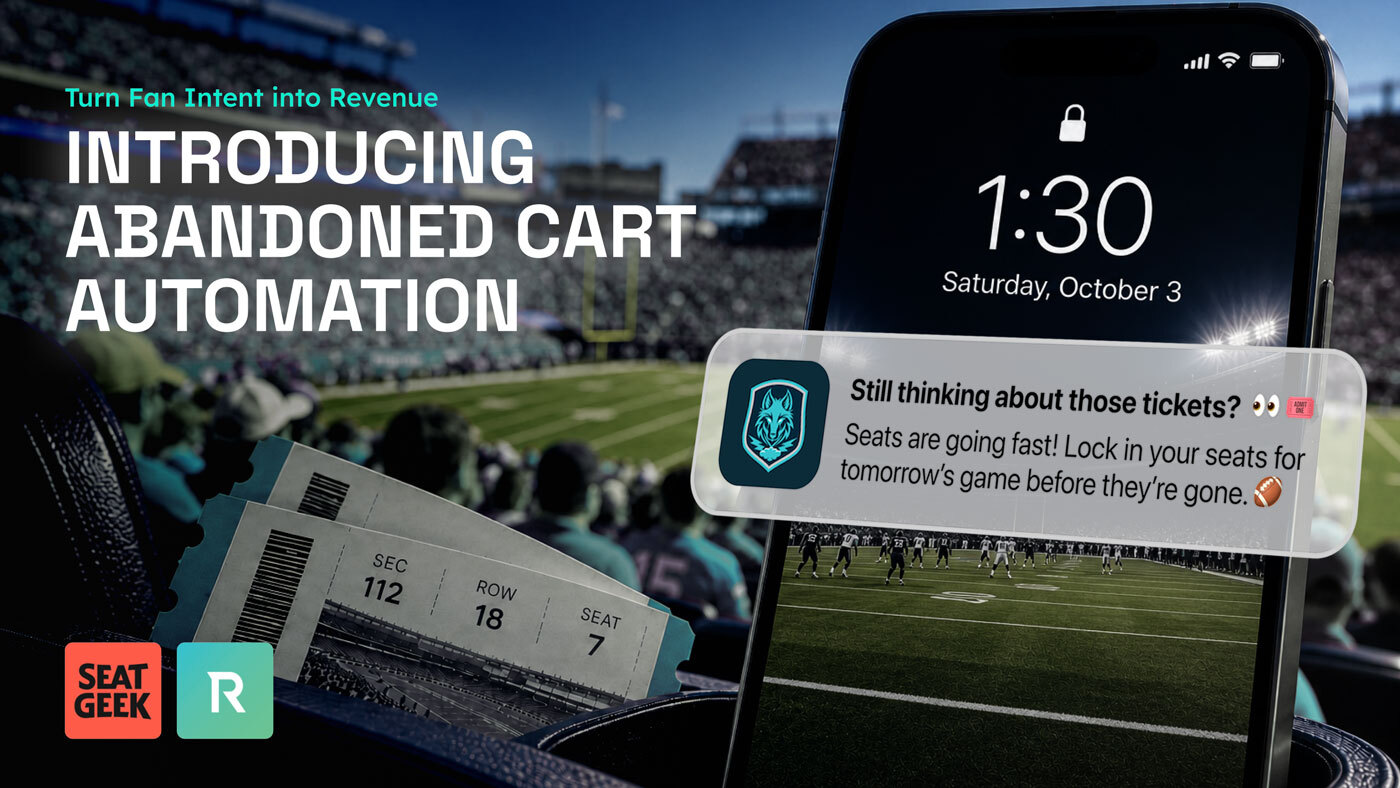
A fan browses tickets, selects their seats and starts the purchase process, but doesn’t complete the transaction.
That moment represents one of the strongest purchase-intent signals available. And now, Rover customers using SeatGeek can automatically act on it.
Rover can now ingest SeatGeek’s abandoned-cart event directly into our automation and journey engine, enabling teams to automatically identify and re-engage fans who leave a ticket purchase behind.
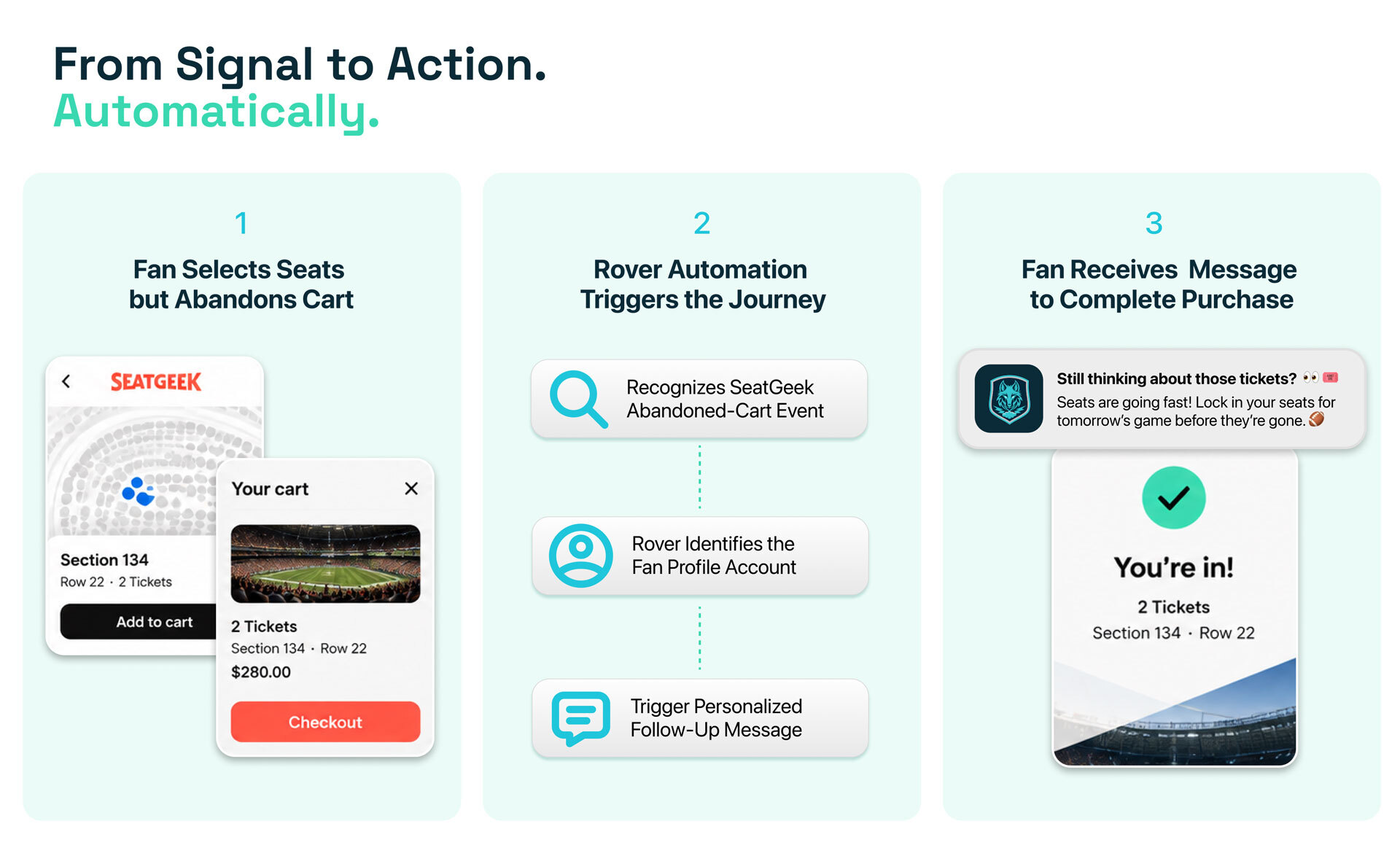
The workflow is simple: a fan abandons their cart, Rover triggers the appropriate follow-up, and your team gets another opportunity to convert that demand into revenue.
Once the automation is running, it continues working in the background, without adding another task to your team’s list.
More than an abandoned-cart workflow
While we’re excited about the immediate revenue opportunity this creates, this feature also represents something bigger about where we’re tackling at Rover.
Our focus is on helping teams grow the lifetime value of every fan.
Doing that means understanding the signals fans generate throughout their relationship with a team. This includes what they buy, where they sit, which games they attend, how they engage and what actions they take. Making it easy to turn those signals into better experiences and more revenue.
The challenge isn’t a lack of data. Sports organizations have more fan data than ever.
The challenge is activating it.
That’s where automation becomes incredibly powerful.
Instead of requiring a marketer to identify an opportunity, build a list, launch a campaign and repeat the process every time, Rover can continuously listen for the moments that matter and automatically trigger the right journey.
Abandoned cart is a great example.
A fan demonstrates clear intent to purchase. Rover recognizes that signal. The appropriate follow-up happens automatically, while that intent is still relevant.
Your team doesn’t have to do anything.
Better fan experiences. More revenue. Less work.
These three pillars are in our DNA.
Automation shouldn’t simply mean sending more messages. It means delivering more relevant experiences based on what we know about each fan and where they are in their relationship with your organization.
That could mean helping a fan complete a ticket purchase today. It could mean improving a season ticket member’s experience throughout the season. It could mean identifying the right moment to drive a renewal, an upgrade or another purchase in the future.
Each interaction is an opportunity to strengthen the fan relationship and grow its lifetime value.
And when those interactions are automated, teams can deliver that level of personalization at scale without creating more work for already-busy digital, marketing, ticketing and membership teams.
More to come
This new abandoned-cart automation is another step in that direction, but it won’t be the last.
We’re continuing to expand the signals Rover can act on, the workflows teams can automate and the ways those journeys can engage fans across channels.
The goal is simple: make it easier for teams to turn their fan and ticketing data into action.
Less manual work. Better fan experiences. More opportunities to drive revenue.
That’s the direction we’re building toward, and there’s a lot more to come.